
Southwestern Pond Turtle Research (SWPT)
Project Status: Active
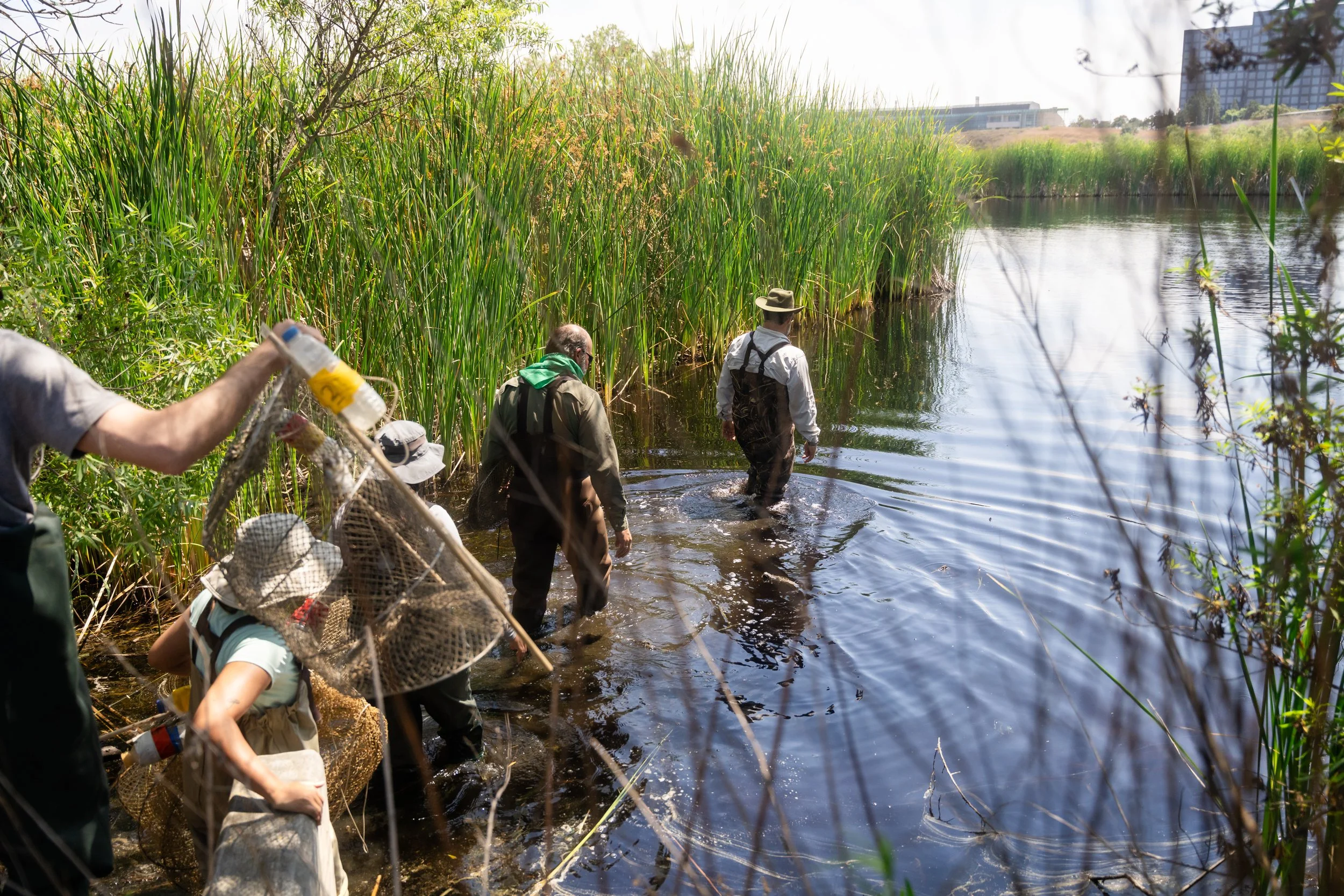
Photo by Summer CalderonSouthwestern Pond Turtle (Actinemys pallida)
Southwestern pond turtles are distributed from south of San Francisco Bay along California's central coast to Baja California, Mexico. They are small to medium-sized turtles with dark brown, olive brown, or black upper shells and a yellowish underside. Southwestern pond turtles are found in a variety of freshwater habitats, including rivers, marshes, lakes, estuaries, vernal pools, and ponds, and use terrestrial habitats for nesting, estivation, and overwintering. Their diet consists of aquatic plants, invertebrates such as worms and crayfish, frog and salamander eggs, and sometimes fish. They are currently listed as “Species of Special Concern” in California.
Main Threats To The Southwestern Pond Turtle:
Habitat Loss and Fragmentation
Invasive Species
Climate Change
Disease
Human Disturbance
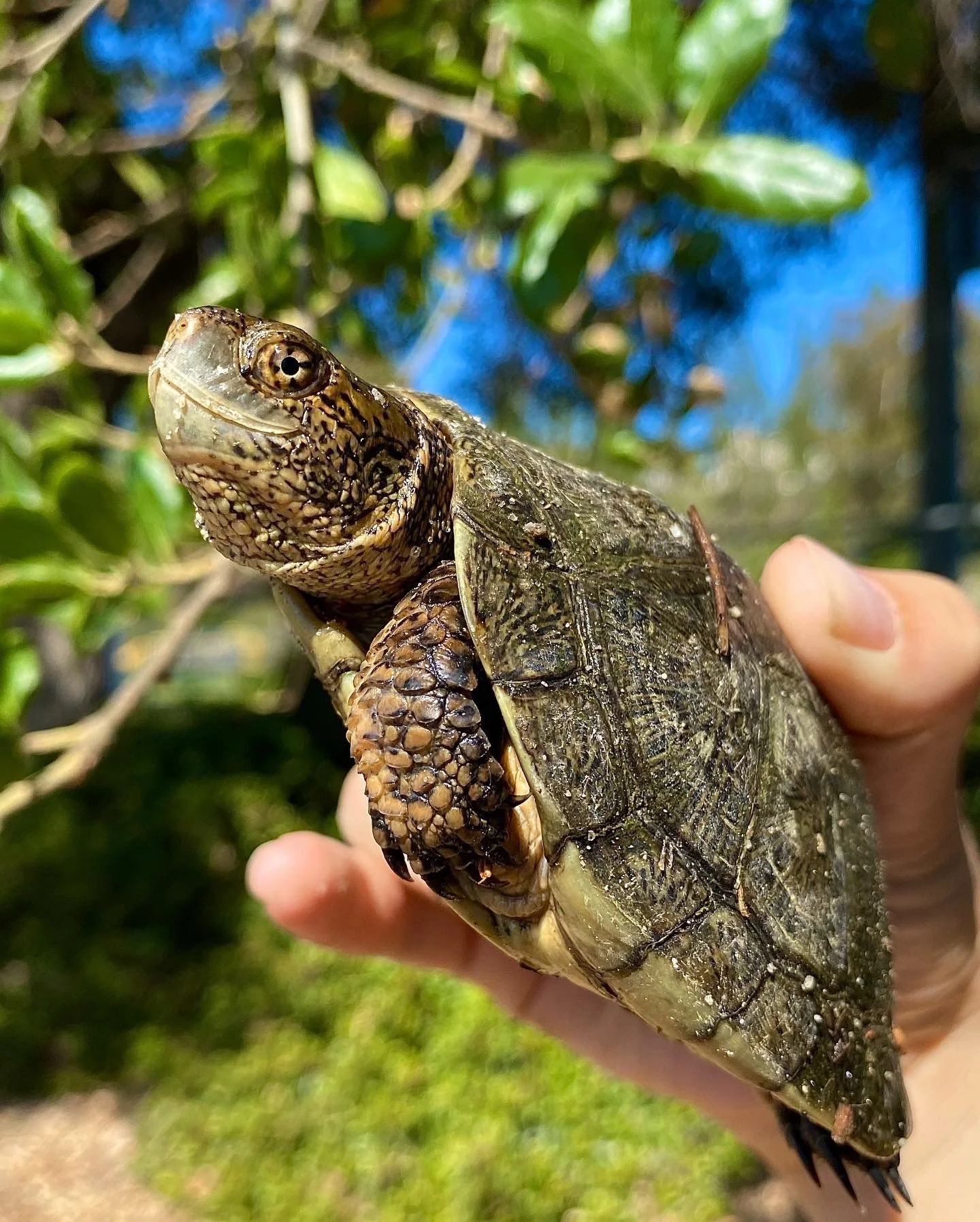
Adult Southwestern Pond Turtle In Southern California, 91% of our wetlands have been lost due to agricultural, urban development, and water diversion.
Project History
ICRE founder Barry Nerhus conducted a quantitative analysis of the population size of the southwestern pond turtle at the University of California Reserve System's San Joaquin Marsh Reserve. This study followed a major habitat restoration project at the marsh to remove invasive species and create habitat more suitable for the southwestern pond turtle. In Barry’s mark-recapture study, which began in 2008 and ended in 2012, he estimated 307 turtles at the Reserve. This analysis provides a baseline against which we can compare long-term population monitoring trends.
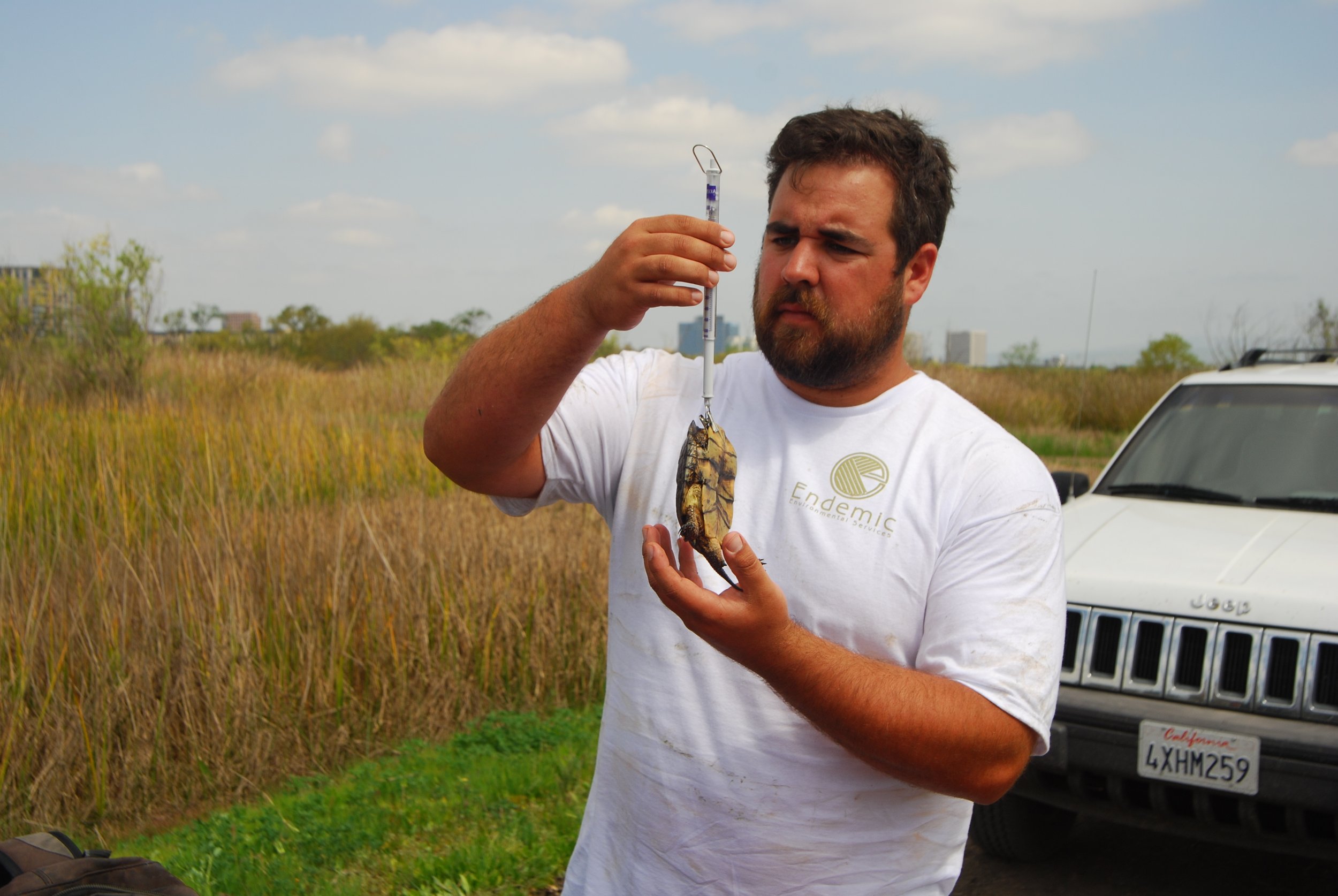
Barry Nerhus measuring a southwestern pond turtle.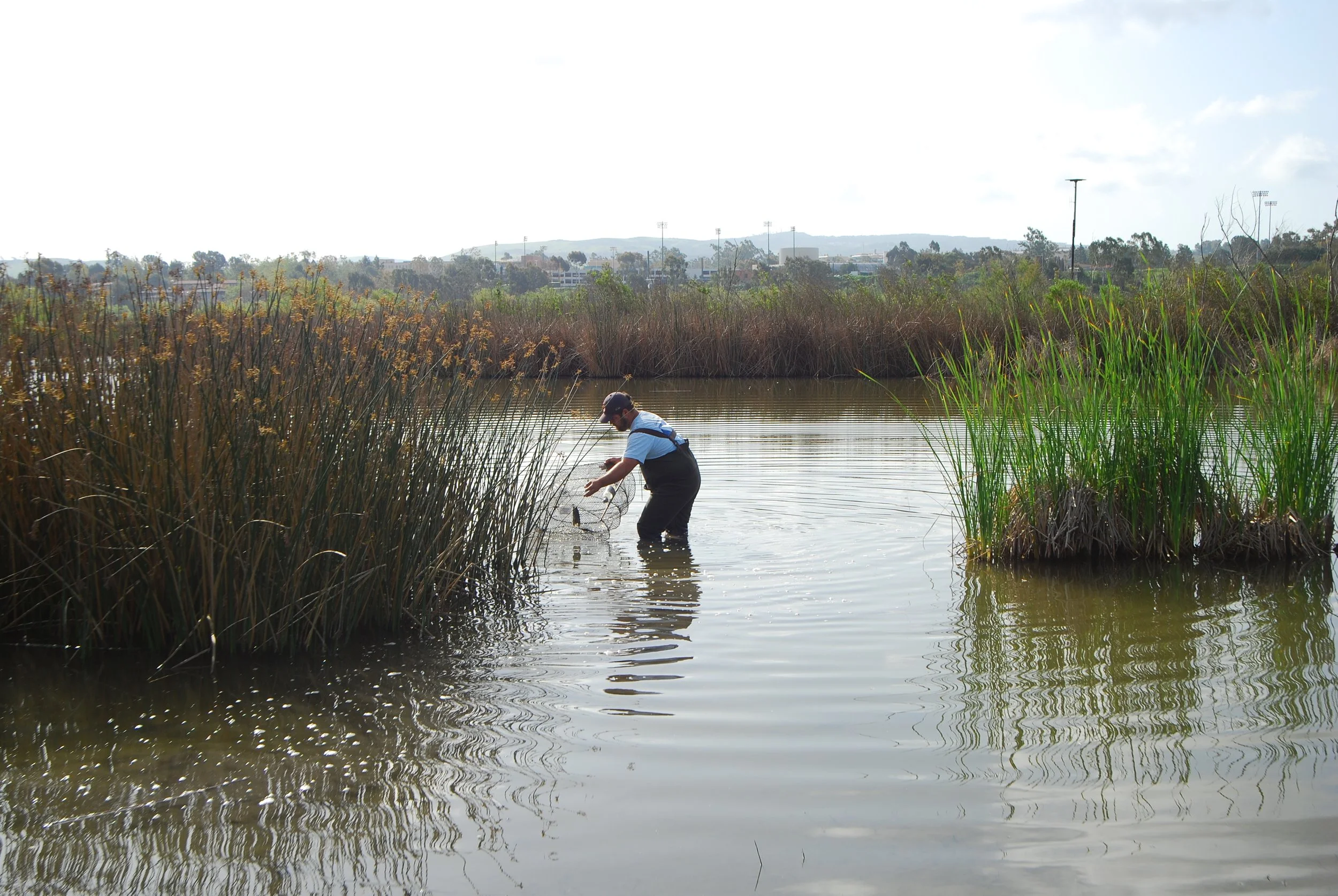
Barry Nerhus setting out turtle traps.Our Research
ICRE is currently studying two populations of southwestern pond turtles, one at the University of California, Reserve System San Joaquin Marsh Reserve in Irvine, CA and the other at Aliso Creek in Aliso Viejo, CA.
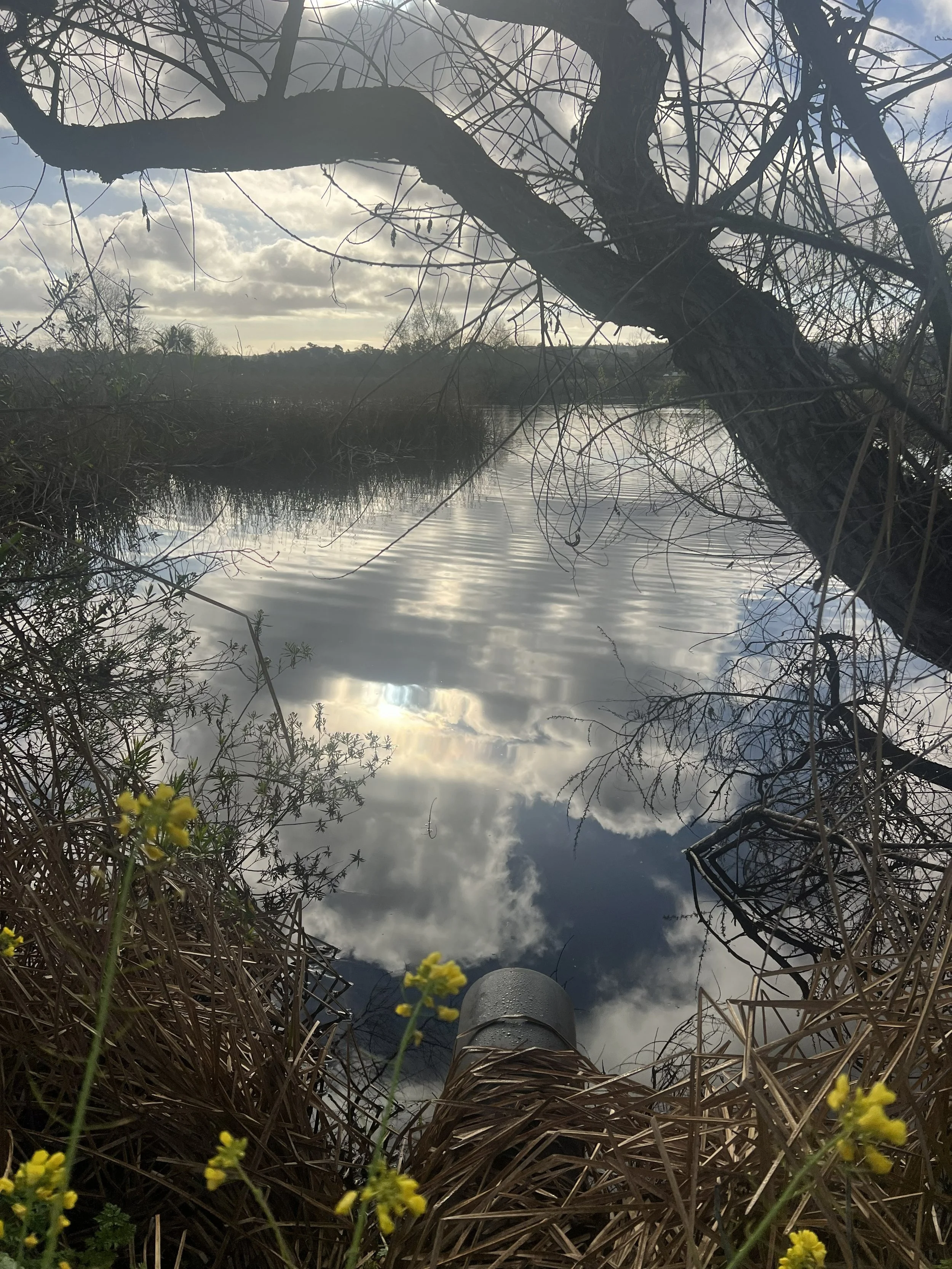
Photo by Thea WangAfter a multi-year drought in Orange County, CA, ICRE created a project to assess trends in the southwestern pond turtle population and habitat use at the Reserve.
San Joaquin Marsh Reserve
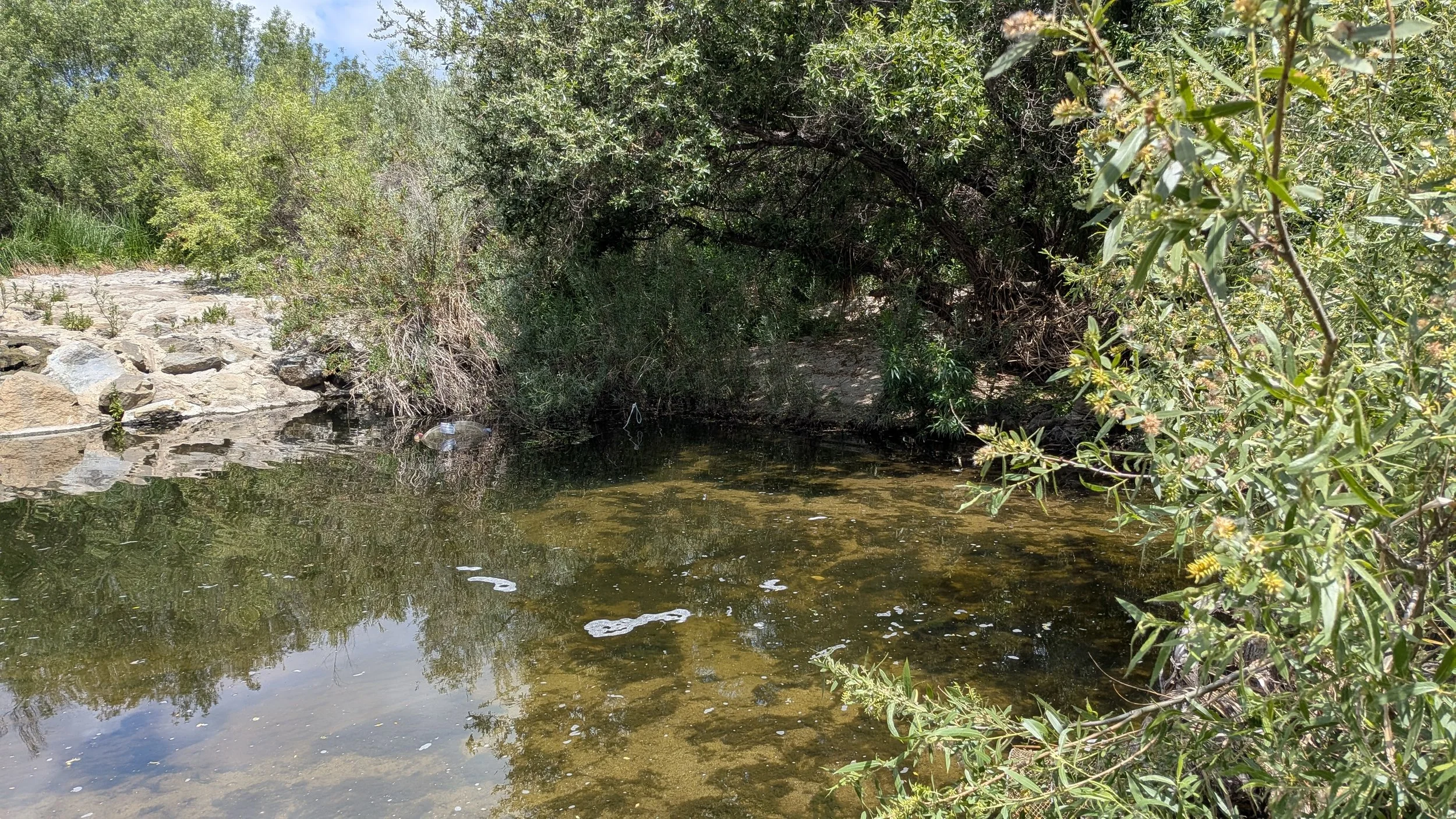
Photo by Thea WangThe second project ICRE is conducting assesses the size and demography of the southwestern pond turtle after the removal of the invasive Arundo donax (Giant reed).
Aliso Creek
Our Work
Both projects use baited hoop-funnel net traps to capture turtles overnight. The following day, captured turtles are removed from the traps and measured to record sex, carapace length, shell depth, weight, and annuli count for age estimation. Each individual is assigned a unique identification number using the Western Pond Turtle numbering system, and marginal scutes on the carapace are carefully notched with a nail file to allow future identification upon recapture. In some cases, researchers also use radiotelemetry by attaching small transmitters to turtle shells to identify nest locations and estivation sites and to monitor movement patterns.
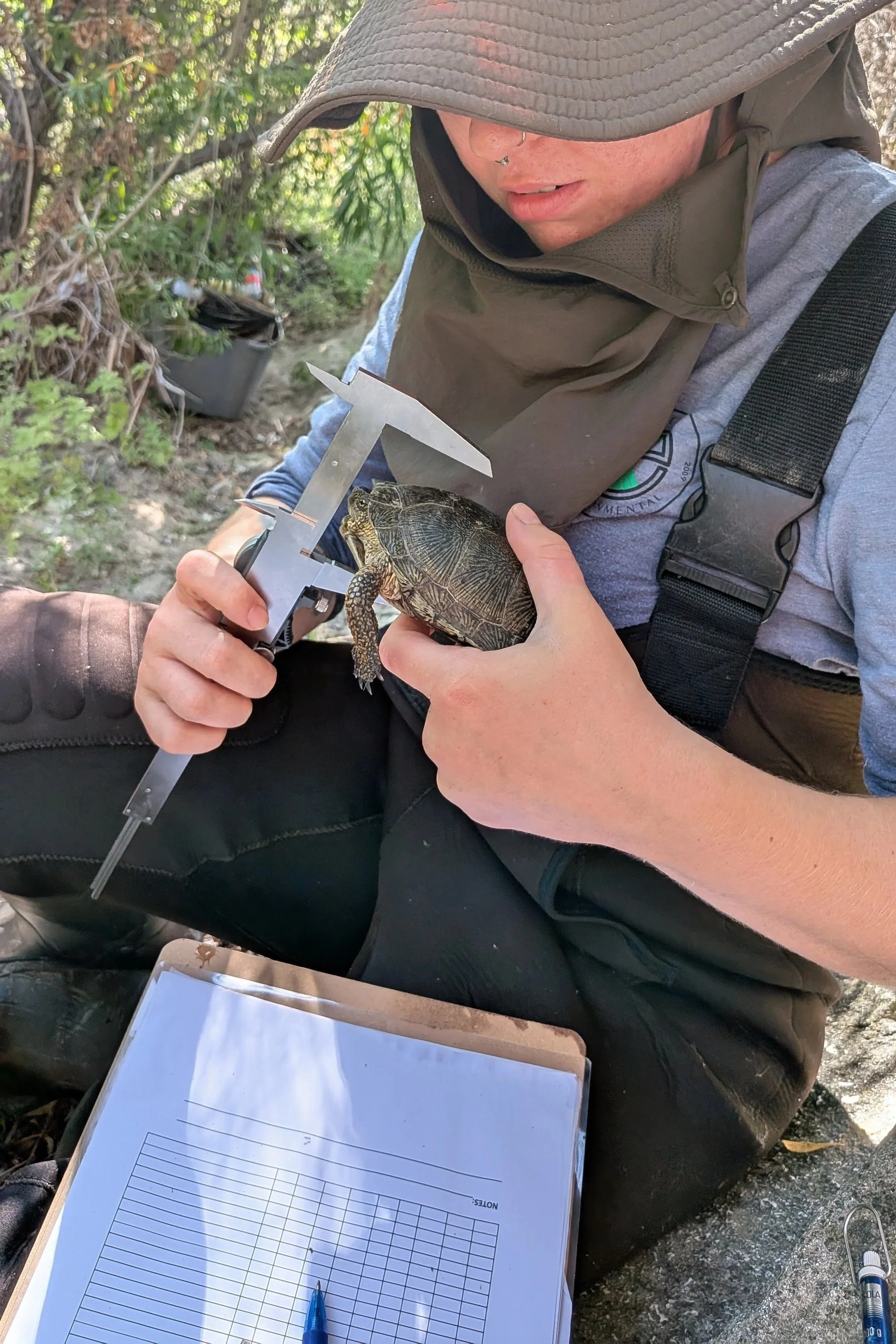
Biologist measuring a southwestern pond turtle. Photo by Thea Wang.Project Goals
In Southern California, major data gaps remain on southwestern pond turtle locations, population sizes, and fecundity (the ability to produce offspring). By documenting and monitoring known southwestern pond turtle locations, we can assess whether these populations are healthy, whether recruitment and growth are occurring, and, by tracking females, where nests occur. These findings deepen our knowledge of the species and can provide the information needed to drive conservation and land management decisions.
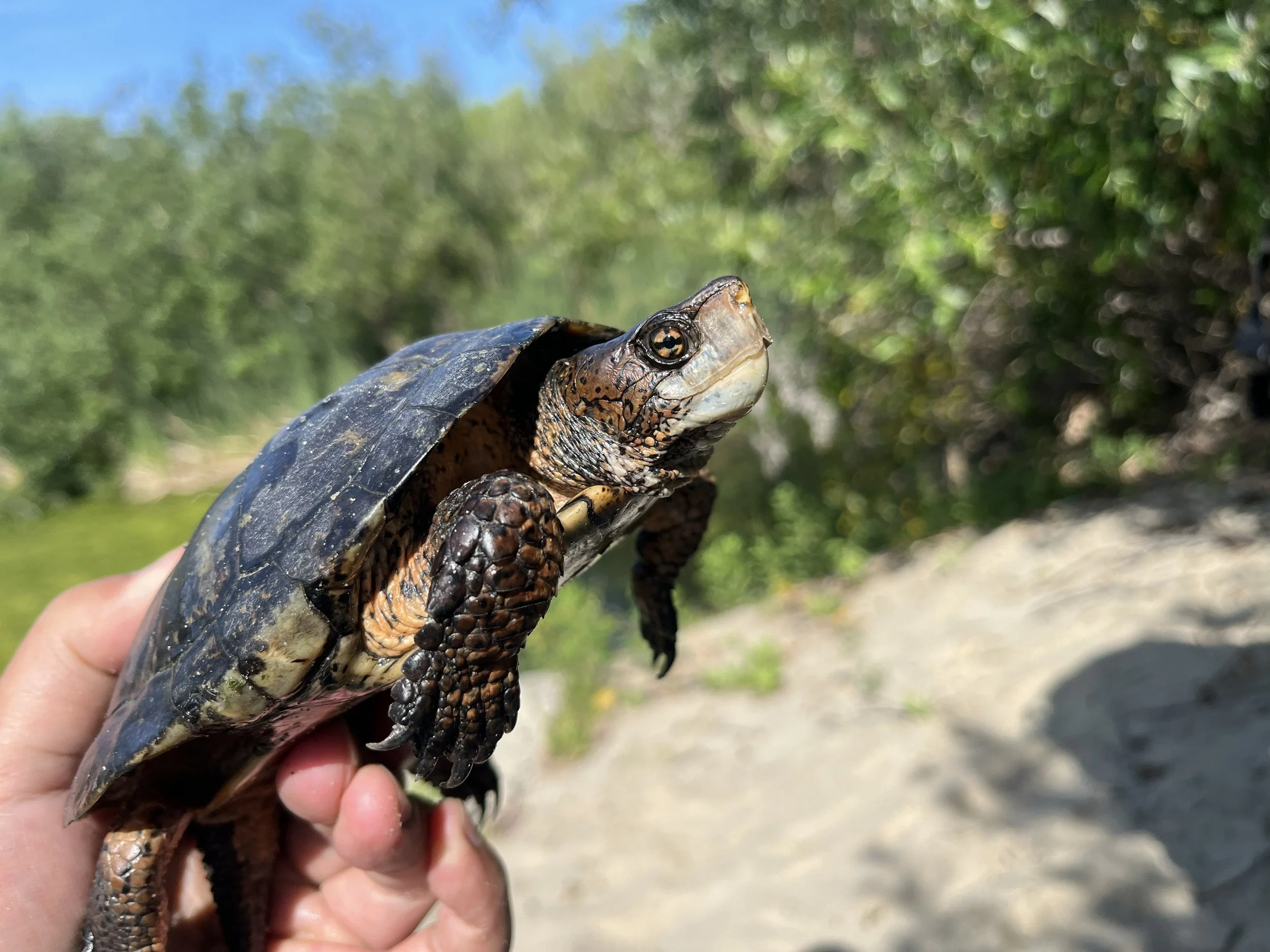
Adult southwestern pond turtle